There is just something about these tiny little ecosystems we call nanos that many are drawn to. The idea that an entire world can exist in such a small space is very intriguing, and the fact that we constructed and maintain that tiny world can, perhaps, make us feel powerful. Setting up a nano can be a fun journey and for some people it is easier to enter the world of salt water keeping with little tanks, which usually equates less cost.
What is a nano?
A nano is just a small tank, salt or fresh water. For salt water tanks a nano usually refers to a tank less than 20 to 29 gallons. For fresh water a nano is usually 5 gallons and under. Nanos can be just a regular small aquarium, or they can be a specially made "nano" such as the biocube or picotope tanks, the only requirement is that they be small!
Why a nano?
Well, they don't take up as much space as a large aquarium. They are challenging, they can be cheaper than setting up a large aquarium, and, well they are fun. It can be fun selecting and maintaining plants, or in the case of marine nanos, corals that are small enough to fit into your tank.
Caring for a nano
Nano tanks can be more challenging than larger aquariums to care for. With less water to act as a buffer, things can wrong quickly. Many need frequent water changes, often a few times a week. At least the water changes are usually only a few gallons or less. Algae may grow quicker, and therefore the glass often needs to be cleaned more frequently. Pruning will need to be done much more frequently. With such a small space plants and corals need to be kept in check to ensure they do not overtake the aquarium. Essentially all the normal maintenance needs to be done more frequently, but it is at least on a small scale.
Disadvantages of a nano
What is also an advantage can also be a disadvantage here; space. While the aquarium itself won't take up to much of your living space its small size does not give the inhabitants much room. Many nanos can either only have a couple of tiny fish or invertebrates, or none at all. Some nanos can only have either plants or corals, with perhaps a snail or two. Anything more will overload the tank with biological wastes and crash it. Some might be able to house a few tiny fish such as celestial danios in the case of fresh water, or a single clown fish or pair of small gobies in a marine setup. The other disadvantage is that if things go wrong and you do not catch it immediatly you are almost certain to lose your livestock. The small amount of water does not do much to dilute wastes and toxins, which makes time a priority in the event of a fish dieing or anything else can happen to disrupt your water chemistry.
Whatever your reason for liking them, whether its financial, space or enjoying the challenge of the tiny many can agree there is just nothing quite like a nano!
Tuesday, December 22, 2009
The Allure Of Nanos

Thursday, July 10, 2008
Selecting Your First Aquarium
You've decided to take the plunge . . . you want an aquarium. So its easy right? You just go to the local fish store and grab a 10 gallon tank, a cheap filter, a heater some gravel and decorations, you think your all set. A couple of months later you are dismayed that your tank is full with only 8 or 9 small tropical fish, you have had to upgrade to a better filter and you couldn't get the fish you really wanted because they would get too big or aggressive for a tank of your size. Many people start out in the hobby this way. There is however a better way to go about it. It involves doing some research and waiting a little bit before getting your first aquarium.
Step One
The first step to acquiring an aquarium that you will be happy with is to go to the local fish stores and look at the fish. Bring a notepad and a pen with you and give yourself a good amount of time. Just look at the fish for awhile, write down the names of ones you like. Make notes about what it is you like about them. Maybe its the way they all swim together, perhaps the color, possibly the way it comes up to glass and looks right at you. Once you have gone to several local fish stores and have a good list of fish you can move on to step two.
Step Two
Now that you have a long list of fish that you like its time to jump online and do some research. Usually finding a good online fish group, such as TFA will be helpful in this area, you can ask questions and get answers from knowledgeable hobbyists. Things you want to find out about each type of fish are adult size, water chemistry needs (such hardness and pH), dietary needs (will the
Step Three
Purchase your aquarium! All the hard work and research is done with and you can finally 
Doing some research ahead of time will make the aquarium hobby a more pleasant experience for you and the fish you decide to keep. Have fun with it!
Picture credits:

threefingeredlord, skippy13, Jarosław Pocztarski's,
Kasia/flickr
Thursday, June 26, 2008
Otocinclus - The tiny algae eater
Otocinclus are a favorite among planted tank enthusiasts. They are small in stature, never exceeding 2 inches, and do a great job and gently cleaning algae off of plant leaves and the aquarium glass. They are also fun to watch as they often swim together in groups, mid-water, unlike many other fish commonly used as algae control. There are 16 known species of Otocinclus, the most common being O. affinis.
These little algae eating gems are found in oxygen rich streams in South America, from northern Venezuela to northern Argentina. They are not normally found in the Amazon and Orinoco lowlands. The streams they are usually found in have a low pH and have a slow to moderate flow. They are often found near the banks, in large schools.
In the aquarium these fish can be a bit difficult to acclimatize, but once they are they seem to be pretty hardy and adaptable. They do best if kept in groups of 3 or more. They can be kept in both small and larger aquariums. They do an excellent job of eating most algae from decorations, plants and the glass. They do such a good job that they often need to be fed algae wafers to supplement their diet.
picture credit: elpono_njg

Saturday, February 23, 2008
Enrichment
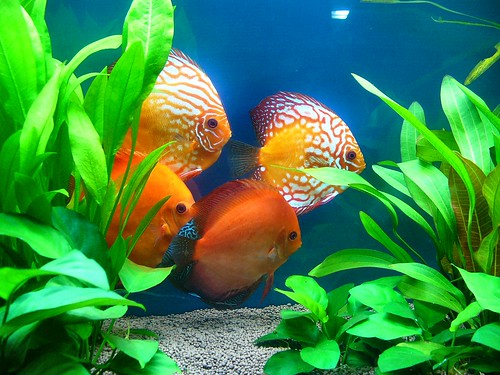
When people talk about enrichment and animals they are usually talking about enriching the lives of creatures like tigers, apes and parrots. Often not much thought is given to enriching the lives of fish. Many fish however have been shown to have some intelligence. Even guppies can count to the number four! Cichlids have often been considered very intelligent fish and many would do well to have some enrichment. With this in mind, perhaps it is time to start looking into how we can enrich the lives of our aquatic pals.
What is enrichment?
When we talk about enrichment concerning animals we are referring to improving their lives, stimulating them. Enrichment is a common topic among many institutions, such as zoos, that have animals. When looking to enrich an animals life its a good idea to start by looking at how they would normally behave in the wild and try to offer things that may trigger similar behaviors. For example, with many mammalian predators, keepers will often hide their food so they have to "hunt for it". Or they will put in large balls or other things that move when the animal touches it and this stimulates a prey drive. Primates are often offered puzzles and other things that stimulate their intellect. Without enrichment many captive animals become extremely bored, obese and some may even exhibit bizarre behaviors.
Enriching The Lives Of Fish
So, how would one go about enriching the lives of fish? Well, that would depend on the type of fish. For many fish, simply having tankmates and an interesting environment with a lot of visual barriers will be enrichment enough. For others you may need to get creative and utilize ping pong balls, a mirror or even a squeaky toy! Food can perhaps be one of the best enrichment tools available to animal keepers, try to get creative.
Tankmates
Tankmates can provide plenty of entertainment for many fish. Schooling fish such as barbs, tetras, rasboras and many more benefit most from being in groups of 6 or more of their own kind (for example, 6 neon tetras, not 1 each of 6 different tetras). They will spend most of their day reacting to each other, displaying, and working out their social hierarchy. Rock dwelling African cichlids spend much of their time in both the wild and captivity stealing and protecting favorite rock outcroppings and caves from each other. If your lone fish seems sedentary and bored with life, consider upgrading its tank size and adding some tankmates. Remember to research first what types of fish can live together.
Use fake or live plants, driftwood pieces or other decorations to create a dynamic aquascape. Try to position decorations so that if the fish is in one section of the tank, it cannot see the other side without moving. This will stimulate most fish to always be on the move to check out what's "over there". If you have multiple fish this can also be a necessity, as it will give fish a break from each other if the needs arrives. Many fish, like botias and loaches love to check out caves and little nooks and crannies. You can make an interesting cave and tunnel system with PVC pieces, just make sure they are big enough in diameter that the fish won't get stuck. African cichlids also often enjoy PVC pieces. If you want a more natural look, use rocks and aquarium safe wood instead of PVC. For top dwelling fish, add floating plants (live or fake) and perhaps add a piece of wood that reaches all the way to the surface.
You need a big enough space to create an interesting environment. Try to avoid overstocking your tank with many small fish. If you have large fish, ensure the aquarium is large enough for the fish and some decorations.
Toys
Many large fish are kept by themselves because of the amount of tank space it would take to have appropriate tankmates. Oscars are a prime example. Many live alone in 75 gallon tanks with not much to do all day. Other fish live alone because they are aggressive or because they can survive in a smaller tank that only has room for one fish (bettas for example). Many of these fish are some of the most intelligent, and yet they are often the ones relegated to the most boring existence. Many of these fish will benefit from toys to play with, yes toys. Many larger cichlids will "play" with a floating ping pong ball, or will check out and manipulate with their mouths new items in their territory. One oscar seemed to enjoy a dog toy, it was a small squeaky toy. The oscar would carry it around, biting on it. Some toys can be used to hide food in, so the fish has to work to get its meal. If you decide to use a toy for your fish, make sure it will not negatively affect the aquarium water. With bettas, holding up a small mirror for a minute or so a day will initiate a threat display and give the betta some excellent exercise. They often appear to "feel proud" of themselves when the mirror is put away, for having chased away the opponent. You can even teach your fish to do tricks . . . such as play soccer, basket ball, or swim through hoops.
Food As An Enrichment Tool
Food can perhaps be one of the best enrichment tools available to keepers. One of the biggest delights of many aquarium keepers is feeding time. The fish become animated, excited. Its nice to see them enjoying something. Most people just toss in some flakes or pellet foods and in a minute, or even just a few seconds, it is over. In the wild fish have to work for their food. Finding and getting food preoccupies much of their day. In captivity it is something that takes up perhaps just a few seconds, once, maybe twice a day. So, how do you go about making eating more interesting? Well, that will depend on how your fish eat. You would feed a top dwelling fish differently than a bottom dweller and grazers differently than a predator.
Try adding live foods fairly often, such as brine shrimp. They will have to hunt them down and will often spend some time after they have eaten them all, looking for more. If brine shrimp are too small for your fish, try ghost shrimp instead. If you don't have access to live foods, put frozen foods into the filter current so they have to chase them down. Feed different types of foods, alternate between a flake food, a floating pellet and a slow sinking pellet. Feed in a different area, alternate sporadically between the left of the tank, the right, the middle, the front and the back. Try adding a live food that can survive and breed in the tank, such as a species of fresh water shrimp. Some people have successfully been able to keep a small population of daphnia alive in their aquarium. For bottom dwelling and grazing type fish (catfish; goldfish), drop one pellet here, one there, don't just drop them all in one spot. For predators, put food on the end of a feeding wand an make them stalk and hunt down their food. Many herbivorous fish, such as goldfish or silver dollars, will enjoy eating live plants; drop a bunch of anacharis (elodea) in the tank once in awhile. Some fish can learn to put a ball through a hoop or ring a bell to get fed. Again, just be creative and mix it up, your fish will appreciate it.
When it comes to enriching the lives of our aquarium fish it can be as simple as adding some tankmates and decorations, or as complicated as giving them toys to chase and push around, or rigging up an underwater basket ball game. Even the simplest forms of enrichment can make a huge improvement on their lives.
Interesting links:
Underwater Times: Man Trains Goldfish
Fish School - How To Train Your Fish
Picture credits:
loloieg, doviende, Whisper Photography, Tom@HK

Saturday, February 9, 2008
Dealing With Burn Out
Dealing With Burn Out
Burn out
No, I'm not referring to water dripping onto one of your many electrical strips, I am talking about something that happens to many hobbyist at one point or another. As you are going along doing your water changes you suddenly realize that your tanks have turned into a chore rather than a pleasure. You used to get a thrill out of your tanks, seeing baby fish or a new plant pop up. Now when you gaze in the direction of your tank or fish room you get a long list of "to-dos" popping up in your head. You find yourself avoiding the tanks, diverting your eyes from the multitudes of little fish. You go longer between doing your water changes, you aren't as diligent about dosing your fertilizers or supplements. Your bulbs go unchanged. You derive little pleasure from you once highly enjoyed hobby. What happened? You have burned out.
Whats The Cause?
Burn out can happen to anyone, whether they have one tank or hundreds. Whether they have been in the hobby for 20 years or one. What causes it? Well, that is probably different for everyone. As humans our interests do change over time. Perhaps you now find that orchids or glass blowing gives you your thrills. Maybe your life has become busy and time is just something you don't have to spare. For some people, once their tanks are set up and they are not out buying new fish and selecting plants and researching who can live with who boredom sets in. What ever the cause, it does happen.
How To Handle It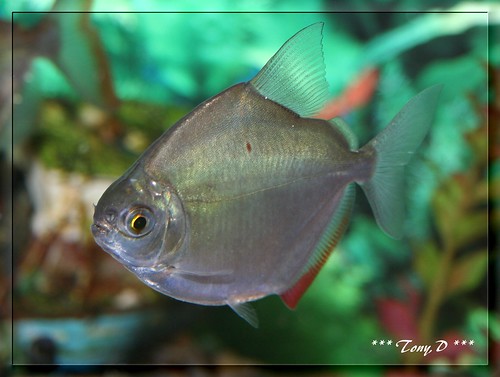
1. New is exciting, redo your tank. Trade your fish in, redecorate and try different fish. Setting up a new tank is often very exciting for people and this may just be what you need. If you have been keeping fancy guppies forever, try something completely different, like cichlids. If you are keeping a reef tank, try switching to fancy goldfish. A change may just be your cure.
2. Join an aquarium club. Excitement and enthusiasm are contagious! Surround yourself with others who enjoy the hobby. You can get new ideas, trade fish and just have a good time chatting about the hobby.
3. Spend time just enjoying your tank. If all you do is maintenance on your tank and you never sit back to enjoy the fruits of your labor it can be very easy to burn out. Try moving your tank somewhere that you can easily see it.
4. Try less tanks. If you have a huge fish room with tons of tanks all over, try taking some down and focusing on just a few display tanks or on just breeding a couple of species that interest you.
5. Go to the next level. Have you mastered keeping the tropical community tank? M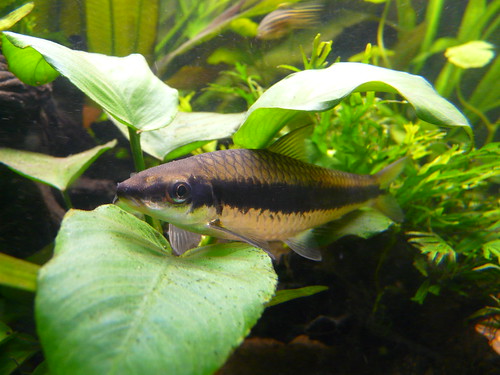
6. Make it easier. Invest in automatic water changing systems, feeders and dosers or hire someone who does tank maintenance. If you have less work to do on your tank you will probably enjoy it more, not to mention that playing with new gadgets is always fun. Also, this way, if you are burnt out your fish will not suffer the consequences.
If you find you just can't muster up enthusiasm for the hobby you once enjoyed, perhaps it is time to take a break. Remember that the fish rely on you for their survival and if you are dreading working your tank you are less likely to take as good care of it. Besides, why do something you don't enjoy? Many people find they just need a break for a couple of years. If you decide you need a break, I highly recommend you keep all of your equipment in storage as the fish bug often bites again.
Photo credits in order of appearance: nellring, tkcrash123, threefingeredlord
Friday, January 25, 2008
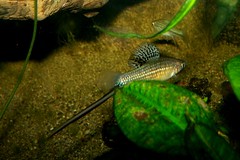
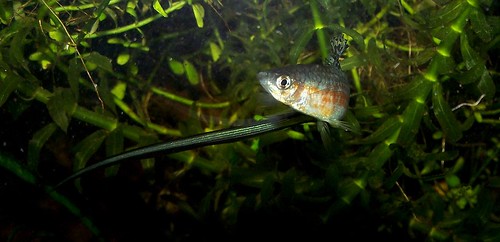
Montezuma Sword-Tails (Xiphophorus montezumae)
Montezuma Sword-tails (Xiphophorus montezumae)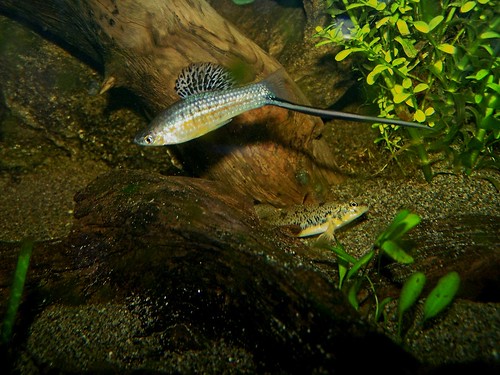
Captive Care
Montezuma sword-tails (often called "monties") are fairly easy to keep happy. They should be kept in groups with a ratio of one male to every 2 or more females. A 30 gallon long style aquarium can house a group of up to 6 adults. The aquarium should have some areas that densely planted (with live or fake plants) and some open areas. If you have enough cover, fry will survive with the adults.
Water Quality
As with all fish, stable, clean water is the most important to these pretty sword-tails. As long as the water is parameters are stable and the water is clean (no ammonia or nitrites, low nitrates, low dissolved solids) they should be able to adapt to most pH and hardness levels. Having said that, it is probably a good idea to keep their pH above 7.0 and below 8.0 and the dH between 10 and 20. They seem to handle temperatures between 68*f to 82*f fairly well. They may not breed at the lower and higher ranges, but that is just a guess. If kept in the higher range, remember to add extra aeration as warmer water does not hold oxygen as well as colder water. Also, never lower temperatures more the 2*f every few hours and do not raise them more 4*f every couple of hours. Stability and avoiding extremes is the most important thing.
Food
Monties are not picking about what they eat from what I have seen. As with most fish they do best on a variety. Use a couple of different flake foods (I suggest one brine shrimp flake, one spirulina flake and a generic tropical flake) and supplement with live foods (brine shrimp, clean blood worms, mosquito larvae, fruit flies, be imaginative!) and with frozen foods (brine shrimp, blood worms, mysis shrimp . . .). If you give them good nutrition and good water they should grow and breed for you.
Tank Mates
If you wish to keep monties with other fish, avoid mixing them with other sword-tails or platies or you may get some hybridization. They can safely be mixed with goodeids and I believe fish in the genus Poecilia. They can also be mixed with some peaceful tetras (stay away from nippers, the long swords are very tempting!), and peaceful bottom feeders such corydoras catfish. You can try a variety of tank mates, just remove any that aren't working out.
What Makes Monties So Special?
Perhaps the most stunning feature of montezuma swordtails is, well, their sword! Mature males will often have swords that are longer than their body. Even young males have long swords that usually equal the length of their body. Not only is their sword impressive, but they are not a drab fish. Even the females are nice to look at. Their dorsal fins are rather tall and they are not usually shy to display!
A Confusing Past
In the past a different fish was being masqueraded in the aquarium hobby as montezuma sword-tails. This fish was X. nezahualcoyotl. This other sword-tail has a shorter body and much shorter sword. In 1980 the true montezuma sword-tail was rediscovered in Mexico and the confusion was straightened out. Since the rediscovery monties have experienced a big rise in popularity, this popularity boom can be greatly attributed to the males extremely long sword. To read an excellent little two part series of articles on the history of the montezuma sword-tail and on the variation of color I highly recommend joining the ALA (American Livebearer Association) and ordering issue #196 and #197 of their bimonthly bulletin, Livebearers.
These guys are a gorgeous wild type swordtail. A friend of mine has a small colony of mottled monties and they are stunning! Someone was nice enough to send me some fry, so I now have some little babies swimming around my tank. They however are mostly looking to be males. I may have 2 females, but the others are boys for sure. Once they are bigger, I will probably trade extra males into the local store and order a few more females online.
Credit for the awesome montezuma sword-tail pictures goes to scott361
Sunday, December 30, 2007
New Filter
Fluvals

Decisions
Now it was time to make a decision, what kind of filter do I want? I wanted a canister filter, I like having them stored under the tank and I like that they don't make a lot of water noise from the return. I also wanted one that would be quiet as the tank is in my bedroom. I wanted one that was easy to take apart and clean and easy to prime. After reading different boxes and talking to a few different employees on their experiences I decided on a rena filstar XP2. I made my purchase and went home.
Rena Filstar XP2

Setting Up
Setting up the filter was overall very easy. The only trouble I encountered was getting the flexible tubing over the pipes. It involved hot water and a lot of pushing on my part, but once they were on everything else was easy. At least I know the tubes are on nice and tight! Everything else was easy to assemble and get on. There are two different choices for the return flow, a spray bar or just a spicket type pipe. You can also attach a peice that has a flow adjuster, or you can leave it off. I was dissapointed that there does not seem to be a way to put the return down at the bottom of the tank. The intake tube allows you have different lengths, but each section is about 4 to 5 inches long, so my intake is a bit higher than I would normally like it, but that is a small price to pay for the ease with which everything went together. Overall I am very pleased with how easy it was to put together.
Priming
Priming was a breeze! Once all the hoses are hooked up, you twist off a cap from the top of the intake and pour some water in. Once the water has filled the hose you recap the top, open the tubes to the canister and water wonderfully flows into the filter and fills it. According to the directions you wait 2 minutes to ensure air has left. I found after 2 minutes a tiny amount of air was left in the filter, gently tipping it to the side got it out. Then I plugged it in and it ran beautifully. I was surprised at how powerful it was, generally I have found that filters are usually not quite as strong as the box would lead you to believe, however this one was better than I expected.
After A Week
After a week of running I am still pleased with my rena filstar XP2 filter. It is running silently and seems to be catching a lot of debris. I love that it is clear and you can see into it. The fluvals have always been dark so you never new what state it was in. This one I can see wether it needs to be cleaned rather than guess. The flow is still going strong, infact I had to turn it down just a bit.
Review
So far I really like the rena, it seems to work good and most of it was easy to assemble. The only bit of trouble I had was getting the tubing over the pipes, but once they are on there they shouldn't need to come off for a good long time. Priming was a breeze.
So far so good! I will report back in a month on how it was to clean!
Fluval image from: http://www.fishtanksdirect.com/index.asp?PageAction=VIEWPROD&ProdID=1006
Rena image from: http://www.aquatichouse.com/FILTRATION%20MENU_files/Filstar.asp
Sunday, October 14, 2007
Supporting Other Hobbyists
Why Support Other Hobbyists

How To Support Them
Many people may not know how to go about supporting their fellow hobbyist. Where do you find them to support them? Well, one of the easiest ways is to join a local fish club. Another is
Supporting other hobbyists supports our hobby.
picture credits:
Saturday, September 29, 2007
A few fishy overviews
harlequin rasbora Trigonostigma heteromorpha
-I have a school of 7 of these egg layers in my 60 gallon. They are great fish, very colorful 
neon tetra Paracheirodon innesi
-These little guys are very popular. They are another egg laying, schooling fish, best in groups of 6 or more and are good community fish. They are a bit delicate and should not be put into new tanks. In fact I find people are
dalmatian sailfin molly Poecilia hybrid
-Dalmation sailfin mollies are a livebearing hybrid fish. Males have the sailfin and females do not. They get a bit large, up to 4 1/2 inches, and do best in bigger tanks (40 gallons or bigger IMO). Ideally they should be kept in groups of one male to several (2 or more) females. They can be a bit nippy at times and usually do well with larger peaceful to semi aggressive fish. They should be fed a diet high in plant matter, so alternating between regular flake food and a spirulina based food is a good idea. pH should be anywhere from 7.0 to 8.2 and temps can be from 72-80*f. Many people say they do better with some aquarium salt in the water at a level of a tsp per gallon or higher. They can even live in pure salt water. Some people have not had problems adding them to a new tank, others have.
mickey mouse platy, red platy, blue coral platy Xiphophorus sp./hybrids
-These are all various color varieties of platies. Their care is the same. Platies get about 2 
lemon tetra Hyphessobrycon pulchripinnis
-These guys are another egg layer. They are fairly resilent little guys and do best in groups of 6 or more. They can be kept in community tanks but I wouldn't put them in with any long
red tailed black shark Epalzeorhynchos bicolor (Labeo bicolor)
-These guys are a bit on the semi aggressive side, but usually only go after other bottom dwelling fish. I would not keep them in anything smaller than 30 gallons, also do not put more than 1 in a tank unless it is a large heavily planted aquarium. Also, do not put them with other fish that look similar to them. They get about 6 inches long and tend to stay near the bottom of the tank. They prefer nuetral to soft water but seem to be very adaptable. Preferred temps are 75-80*F. They will eat flake food and should be given live or frozen brine shrimp every now and then. They seem to be pretty hardy fish. Red tailed sharks are a bit shy so should be given several "hide outs" to make them feel secure enough to come out regularly.
Corydoras elegans/Corydoras panda
-Corydoras are very cute little catfish and there are many, many different species. They like to 
Apistogramma sp
-There are several apistogramma species. Generally none really make good beginner fish because they are picky about water conditions. They are dwarf cichlids and despite being cichlids are usually peaceful. They do best and should be kept in soft water with a low pH. They are usually only successfuly kept in planted aquariums. They are micropredators, which means they need a high protein diet. While many will take flake food they usually will not do well on only that. Offering a variety of frozen and lives foods will be best for them. They like warmer water (upper 70's*f). They are usually kept in breeding pairs of one male and one female. They are usually best kept with tetras or smaller rasbora species. Single pairs can be kept in 10 gallon tanks. Water quality must be maintained with these sensitive little guys.
silver dollar family Metynnis
-These fish get BIG! They get to be as big as an average sized dinner plate. They also need to be in groups of 6 or more. Generally you can start them out in small tanks as they are usually available at 2 inches or so, but eventually you may need a tank of 90 gallons or bigger (probably bigger). They are very active and will often run into the side of the tank if spooked. Keeping them in groups helps calm them down a little. They love to eat plants, and should be fed a variety of vegetables as well as a good flake food. They prefer softer lower pH water but are adaptable. They can be kept with semi aggressive fish and even with many south american cichlids if the tank is big enough. They like water temps in the mid to upper 70's (*f). They are best added to an already cycled tank. They are fairly hardy as long as water quality is kept up and temperature does change to much. They tend to get ICH if the temperature flucuates.
botia striata
-These botias are a semi aggressive fish. They can be kept with bigger tetras (2"), most 
gold gourami Trichogaster trichopterus
-Gold gouramis are a color varient of the blue gourami and can get 4-6 inches long. They can be kept singly or one male with 2 or more females. They are semi aggressive and shouldn't be
honey gourami Trichogaster chuna
-Honey gouramis are small fish, usually staying around 2 inches in length. They can be kept singly or in groups of 1 male to 2 or more females. A single one with a few other small fish can be kept in tanks as small as 5 gallons. These gouramis are very peaceful and do best in community tanks. They are adaptable to water conditions as long as the water is clean and maintained. Temperature should be 74-80*f. They can be fed a good flake food but also need to be fed live or frozen brine and blood worms to keep looking their best. They may get a bit aggressive if they decide to breed as the male protects the nest and young.
pictus catfish Pimelodus pictus
-Pictus catfish are somewhat large (5") predatory fish. They should be kept in bigger semi aggressive tanks with fish that are near equal size or bigger. They prefer soft low pH water but do adapt to various conditions as long as they are not to extreme. They feed on almost anything they can fit in their mouths, from pellets and flake food to small fish. They will usually hide during the day if kept singly, so its usually best to keep 3 or more. They are best in bigger tanks because of their size (55 gallons or larger). Other than eating small fish they are not aggressive. Do not catch them with a net, use a cup to scoop them instead, because they have spines on their fines that will catch in the net. They are pretty hardy as long as the water quality is maintained (as with any fish).
Photo credits (in order of picture appearance):
Dystopian_Optimist, &_yo, Chrischang, Whisper Photography, Chrischang, Whisper Photography, Kasia/flickr
Tuesday, September 11, 2007
Pond Predators
Many people set up a pond in their yard and sit back to enjoy it only to notice a few days later
Where Are The Fish?
The most common reason to fish disappearances are predators. People often forget that predators are still around even in urban areas and that just because your fish are in a yard does not mean they are not fair game to a hungry animal.
Meet The Predators
You may be thrilled to see a majestic blue heron flying over head, only to see it land in your yard moments later. There are many animals that will prey on your fish. Cats, dogs, racoons, blue herons, some snakes and occasionally even people can all be a problem. Identifying who it is that is making unwanted visits to your pond can be a challenge.
Is It Really A Predator?
So, some of your fish are missing, how do tell if its really a predator taking them? The first thing you should do is check your water quality. Test for ammonia, nitrite, nitrate and pH. Your ammonia and nitrite should be 0ppm, your nitrates should be ideally below 40ppm, but at least below 80ppm and your pH just needs to be stable and ideally between 6.5 and 8. Next is to look for bodies, move things around in your pond. You want to make sure the fish are 
Dealing With The Problem
Ok, so you've tested your water, looked for dead fish, have been sitting vigil over your pond for days . . . now what?
Water Quality
If you think your water quality may be the reason behind your fishy dissapearances, take action to

Options For Protection
There are several options for protecting your fish from predation. They include putting a net over your pond, adding more plant cover, putting up a scarecrow, installing a sprinkler system and then hooking it up to a motion detector, fencing in your pond and adding a fake heron. Some of these options will work for some predators and not for others. For example, netting may keep out a heron, but a racoon will often figure out how to get through it. A scarecrow will usually work for a little while but many animals will learn it is fake over time and domestic animals like cats may not even blink an eye at it in the first place. Usually the most effective method of keeping away predators is a sprinkler system hooked up to a motion detector. It is also however one of the more costly options. If you do have a predator problem you may have to try several options before you find the one that works for you. Trapping usually does not work, once you remove one animal another will simply fill its place. Putting in some kind of deterent (scarecrow or sprinkler system) or barrier (netting) is usually the best way to go.
Picture Credits go to:
Sunday, July 29, 2007
Potting Amazon Swords For A Goldfish Tank
A Need For More
The goldfish tank was looking pretty lack luster. The only plants inhabiting the tank were java fern attached to driftwood. It looked nice, but the tank was missing some variety, and some tall plants to fill the upper portions of the tank. Julie and I decided the tank could use some sprucing up and we decided on amazon swords, since I had a plethora of them coming from a mother sword in my tropical planted aquarium. The next step was to figure out how to get them in there adequately.
Pot Them! 
Potting The Swords


Once the swords get big, they will be repotted into larger pots. Now hopefully they will grow well provided the goldfish don't eat them!
Micro Worms
Micro Worms
Setting Them Up


Next, add a pinch or so of dry active yeast to the top of the cereal. 

Feeding Them to Your Fish
Soon you should see the worms climbing up the sides of the container. To feed them to you fry, simply wipe them off and swish them into the tank. They will live for about 6 hours, so do not over feed or they may die and dirty the water. These can usually be kept going for a month, maybe 2 by adding a small pinch of yeast to the culture once a week or so. If the culture gets watery, add some more baby cereal or oatmeal (whatever you are using). When the culture starts to smell bad its time to start a new one. Simply follow the steps above again and add a spoonful of your old culture to the new one. Micro worms can be used as a substitute or an addition to baby brine shrimp. If you only have a small amount of fry and don't want to go through the hassle of hatching baby brine shrimp every day, these can be a great alternative.
Thank you malaysiantrumpetsnails on aquabid for the great starter culture!
Monday, July 23, 2007
Common Livebearers
Poeciliidae is considered a livebearing tooth-carp family. They originate from North, Central and South America. Many have been introduce to nonnative areas. The most commonly available in local fish stores include guppies, mollies and platies. While most livebearers do best in harder water (10 to 30 dH) most are adaptable fish, just needing clean water and a varied diet to do well. These fish are unique in that they do not lay eggs, but instead give birth to live babies. The males possess a specialized anal fin called a Gonopodium that they use to internally fertilize the eggs of the female. The female then carries them inside of her until they are mature. Upon birth the fry are quite large compared to egg layer fry and they can swim right away. In the aquarium they often readily take ground flake food almost immediately. Another interesting aspect of livebearer reproduction is that the females can store sperm for later use. It is said that livebearers can give birth to up to 9 batches of fry from one breeding.
Guppies may be one of the most popular aquarium fish because of their flowing tails and bright colors. Guppies naturally come from northeastern South America and islands off of the northeastern coast. However, because they love to eat mosquito larvae, they have been introduced into many areas. There are many different strains of guppies, they are created by line breeding. Because of this fancy guppies are not as hardy as their wild colored counterparts (called "common guppies"). Common guppies are usually sold as feeder guppies. Guppies are best kept in a 10 gallon tank or larger if you want a group of them. They require clean water and frequent small meals. Because of their long flowing fins many other fish are tempted to nip at them, so choose tank mates carefully. Guppies are usually best kept in groups of 1 male to every 2 or 3 females. However, if you do not want them to breed and just want a fantastic display, a tank full of male guppies only can be done. There may be some occasional fin nipping though. Guppies are tolerant of a wide range of temperatures and water conditions. As long as you keep your water clean guppies should be able to adapt to most pH and hardness ranges. Many people find their guppies do a little bit better with some aquarium salt added to the tank water.
Mollies are also very popular. Many mollies are sensitive to water quality. Mollies can range in size from an inch up to 6 inches. It usually a good idea to keep mollies in slightly larger tanks, starting at 30 gallons. They can be a bit more aggressive than some other fish, not to mention some can get quite large. Mollies are omnivores, but should be fed a lot of plant food. Adding spirulina flakes to their diet, or allowing algae to grow for them to graze on will keep them looking their best. As with the guppies mollies do best in groups of 1 male for every 2 to 3 females.
Platies are perhaps one of the most varied of the livebearers after guppies when it comes to color strains. There are many different varieties of guppies. At any given time at Pet World there may be 10 different types or more. There care is about the same as most other livebearers. Usually reaches sizes of up to 2 inches, they can be kept in 10 gallon tanks or larger. They need clean water, and are very adaptable. Again they do best in groups of 1 male for every 2 to 3 females. They will do fine on regular tropical flake food, but their colors look best if given more variety. Adding spirulina flake and some frozen foods like blood worms and brine shrimp will really make these fish look good!
Swordtails are perhaps one of my favorite out of the common livebearers. The males sport a long extension of their tail that gives these fish their common name. Females are usually rounder and do not have the "sword". Swordtails can get up to 5 inches and come in a variety of colors. It is best to keep these fish in tanks of 20 gallons and up. They do best in the standard male to female ratio of 1 male for every 2 to 3 females. Something that is very interesting about swordtails is that they do change gender with some frequency. When born, all swordtails are female. If at a young age a fish develops into a male, it will stay small in size. If a fish grows as a female and later turns into a male, he will be a large male.
Half Beaks
Half beaks can be found in fresh water, brackish and salt water environments in coastal regions of southeast asia, Thailand, Indonesia, Malaysia, Singapore, Sumatra and Borneo. Their ideal pH range is 7 to 8.5 and temperatures of 70 to 86*f. Some half beaks need to have salt added to the water. The minimum tank size for most half beaks should be 20 to 30 gallons. They do better in shallower, longer tanks than in higher, shorter tanks. They tend to inhabit the upper portions of the water column.
Half beaks are good jumpers, so a secure, tight fitting lid is a good thing to have. Some floating pants, live or fake, should be added to the tank to provide a place for them to retreat. Many people also recommend putting plants around the edges of the aquarium, that reach the surface. This is to try and keep the half beaks from running into the sides of the tank when startled. Males will squabble with each other on occasion and they do best in groups of 1 male and 3 or 4 females.
Half beaks are surface feeders that will take flake food, but should also be fed a wide variety of frozen or live foods. They will take blood worms, black worms, tubifex worms, mosquito larvae, brine shrimp and small insects. Many half beaks will not breed if they are only fed on flake food. Half beaks require clean water and frequent water changes to be successfully kept and bred.
Half beaks are one of the harder to breed of the live bearers. Still born babies are a common problem. Feeding a greater variety of food and adding vitamins to the diet can help alleviate this problem. Males possess a specialized anal fin called an andropodium. The andropodium is similar to the gonopodium of poecilid livebearers After successful fertilization the female will give birth anywhere from 5 to 8 weeks to 10 to 70 young. Gestation and number of fry depends on species. The newborn fry will take baby brine shrimp and powder flake food. Parents will eat the fry, so they need to be separated into their own tank.
Different species may have slightly different care therefore It is best to research the needs of the specific species in question.
Update on Killies and Pictures
An update on my killies. My 2 A. Bitaeniatum "ijebu ode" are doing well. I lost the first 9 eggs I collected to fungus:( I'm sure there will be plenty more to come though. The female is still eating really well, the male is still a bit picky. The "dwarf baby tears" that I had planted in their tank all died. I will be getting something to replace it soon. The fish are starting to get a bit more bold, not darting into hiding every time I come up to the tank. I think they are finally starting to realize that human=food. Here are some bad pics I took of them with my camera phone:
Female:


Male:
A better shot of the male:

Pictures of My Killi Set Up
I took some bad pics of my killie tank with my camera phone. I put a black sweater behind it for the picture because I haven't gotten a background yet. The container & the medicine bottle next to it have eggs in them (and some extra plant stems), I have like 12 or 13 eggs now. Plants are rotala magenta, bolbitis fern, dwarf baby tears and on the left are 2 little stems of glosso. The light is a 13 watt light I got from lowes, 6700K i think was the color temp. It was either that or 6500K. No filter, daily water changes. I am keeping the water level low until I make some kind of top as I don't want them to jump. It is usually slightly higher than this though, I ran out of aged water to fill it up more. I'm not sure how the bolbitis fern will do without current but maybe with the daily water changes it will be ok. The wood is grape vine, boiled many, many times before it would sink. Fish are 2 A. Bitaeniatum "ijebu ode" and there is 1 amano shrimp in there. In the back left corner is the spawning mop . . . where they lay their eggs.
I purchased some live food cultures and 16 petri dish things to keep eggs and fry in. The live foods were walter worms and banana worms. Now I need to order some brine shrimp eggs.


I Have Been Converted
I have been converted to the world of Killies. Today Paul, Don and I went on a little road trip to a fish store in Buffalo. They had an awesome selection and they had killies . . . more than just the golden wonder killies I am used to seeing in stores. Actually, I don't think they had any golden wonders. Anyway, the two that caught my eye were blue gularis and A. Bitaeniatum "ijebu ode". After speaking quickly with Paul (meaning, being persuaded by Paul) when my turn came up to get fish I heard myself asking for a pair killies . . . I decided on the Bits. The gularis are a gorgeous fish, but they get kinda big and wouldn't do well in my 60 gallon with the angelfish. I had the guy helping us grab a male and the female he was showing off for . . . and then he proceeded to drop the male on the floor. He quickly grabbed him and put him in the specimen container with the female, which he immediatly showed off for. He obviously was not phased so I said "I'll take em!". I also grabbed a plant and a trio of rasboras.
The fish did fine on the way home, but not having intended to get anything that wasn't going in my 60 gallon I did not have a place to put them. I was thinking I was going to have to put them in a breeder net, but lightly mentioned they would be happier in a tank to my girlfriend. She surprisingly did not object to another tank, so the fish went into a bucket and I got to work. I am now currently setting up an old 2 gallon slate bottom tank we had previously used for a betta.
A thin layer of black sand, a small piece of driftwood and some live plants are going to be the decor. I will have to go to lowes or home depot for a light for the plants, but that should be all I have left to get.
Starting Out With Goldfish
Keeping goldfish can be a fun and rewarding experience if done correctly. If properly cared for, goldfish can easily live to be 15 years old, and have been known to live to be 43 years old.

Size Considerations
Goldfish get very large. Fancy varieties often get 6 to 8 inches and the single tailed varieties often get up to a foot and a half long. Not only do goldfish get long, but they have a very large body mass. This makes for a very large fish. Adult goldfish (6 inches or larger) should have at least 30 gallons per goldfish. Very large single tailed goldfish should really have about 50 gallons per goldfish. This usually means they are best kept in an outdoor pond. This may seem like a lot of water for one fish, but goldfish produce a lot of waste, so they need a lot of water to dilute this waste. At a stocking density of 30 gallons per 6 inches of goldfish, or 5 gallons per inch of goldfish, weekly 50% water changes should be performed to keep the nitrates below toxic or harmful levels.
What you need
When people buy goldfish in stores, they are usually buying a cute little 1 inch fish and a gallon bowl. In these conditions the fish usually do not live very long. They may last a few months before they finally perish. To successfully start out with young goldfish, a 10 gallon tank can be used, along with a power filter overrated for your size tank. For example, if you have a 10 gallon tank, buy a filter that is rated for 10-20 gallons rather than one that is rated for 5-10 gallons. A thermometer is also useful so you can monitor water temperature. Gravel at a pound per gallon will make the tank look nice and provide more surface area for good bacteria to grow. I usually recommend a heater as well, to keep the water temperature steady, but it is not a necessity. You will also need a water conditioner that removes chlorine and chloramines from your water. All of your equipment should be purchased and set up before you buy your fish.
Setting Up
Once you have purchased all of your equipment it is time to find a suitable place to set it up. A 10 gallon tank full of water with gravel and decorations can weigh up to 100 pounds. To be safe, buy a stand made for the tank. If you want to use something else, keep in mind how much the tank will weigh and make sure that all four of the corners are evenly supported. The tank should not be in direct sunlight or in front of a heating or cooling vent.
Now that you have found an appropriate place to set up your aquarium, rinse your gravel in room temperature water to remove shipping dust and place it in your aquarium. Sloping it so that it is higher in the back and lower in the front usually gives a nice look to it. Set a bowl or plate onto the gravel and start filling your aquarium with room temperature water, pouring it over the plate or bowl so you do not disturb the gravel bed. Once your tank is full, you can put your filter on it. Follow the directions that came with your filter to get it started. If you purchased a heater, set your heater in the aquarium but wait at least 15 minutes before plugging it in. Now you can add the water conditioner as well. Let your tank run for a full 48 hours before you go to purchase your new little fish. Now would be a great time to decorate the aquarium with fake plants or other decorations. Try to make the aquarium look appealing without fish in it. If the tank looks good without fish, you will not be relying on the fish to make it look full and interesting and you will be less likely to want to overstock it.
Cycling and Getting Your Fish
Once your tank has been set up for 48 hours you can do one of two things. You can go out and purchase 1 (only one!) small goldfish. Or you can fishless cycle your tank using pure ammonia. For a how to on fishless cycling go here:Fishless Cycling. When you purchase your goldfish, also purchase food at the same time. Buy a small bottle and put the date on it that you bought it. You should replace it after about 6 months.
If you decided to buy one little goldfish (about an inch long). You will now need to watch your water quality carefully for the next 6 to 8 weeks. Feed your fish very lightly and test your water often, every few days is good. You can purchase a test kit at a store, or many local fish stores will test the water for you. Your tank is going to be going through what is called the cycle process or new tank syndrome. This is the time period in a new tank that good bacteria grow in your gravel that help to break down the waste from your fish. Until this bacteria grows (which can take a total of 6 to 8 weeks in most tanks) your water can become toxic to your new little fish. Regular testing allows you to see when it is toxic.
If the ammonia or nitrite reaches 1.0ppm do a 25% water changes to bring the level down a little bit. If the nitrate ever goes about 20ppm again, do a 25% water change to lower the level. You may end up doing several 25% water changes in a week. Your pH is not much of a concern as long as it remains stable. Your tank will probably also be cloudy during at least some of this time. This is perfectly normal and will eventually go away on its own. Once your tank has fully cycled you can add 1 more small (1 inch) goldfish. If this is your first time keeping goldfish, I recommend fantail goldfish, or oranda goldfish. I do not recommend you get the common single tailed goldfish as they will outgrow a 10 gallon very quickly.
Maintaining Your Tank
Now that you have your 2 small fancy goldfish and a fully cycled aquarium, you will need to maintain it. Once a week you should change about 50% of the aquarium water with fresh water. I like to use water that has been aged for 48 hours and has some water condition in it to remove chlorine and chloramines in it. You will also need a gravel syphon. There should be directions on the package of how to use the gravel syphon. Before you start draining the tank make sure you unplug all of you aquarium equipment (filter, heat and light) for safety. Each week clean one half of the gravel, and alternate between sides with each water change. Once you have drained half of the water, slowly refill it with the aged water you had set aside.
Upgrading
In about a year you will need to think about upgrading your goldfish to a larger aquarium. A good next step up would be a 30 gallon tank. Eventually you will need about 60 gallons for your 2 goldfish, because they will get big! When purchasing aquariums, try to get ones that are wider (deeper), rather than longer as this will help make the tank look fuller than it is because the viewing panel will be smaller. For example, instead of buying a 4 foot long 55 gallon tank for your 2 goldfish, consider buying a 56 gallon column tank that is only 30 inches long. You will have roughly the same amount of water space, but the tank will look fuller than the 4 foot tank would.
To review what you will need to start off and maintain two small, 1 inch, fancy goldfish:
1) 10 gallon tank
1) power filter rated 10-20 gallons
1) 10 pound bag of gravel
1) Thermometer
1) aquarium heater (optional, but recommended)
1) bottle of chlorine and chloramine removing water conditioner
1) gravel syphon
1) test kit that tests for ammonia, nitrite, nitrate and pH
1) container of a high quality goldfish food
Wait at least 6 to 8 weeks, or until your tank is fully cycled to add a second small goldfish. Do not keep more than 2 small goldfish in a 10 gallon aquarium.
Do weekly 50% water changes using a gravel syphon to clean the gravel at the same time.
Upgrade your goldfish to a bigger aquarium in about a year or so.
Have fun with your new finned friends!
Image from: http://www.flickr.com/photos/beastman/378773926/
Keeping Goldfish Outdoors
Goldfish were originally bred for and are best suited for outdoor ponds. Their large bio-mass and active demeanor means that they need a lot of water space per fish. More so than most tropical fish. Their feeding habits also make them more suited for outdoor living. Goldfish tend to feed through out the day, scavenging for little tidbits of food here and there. Outdoors bugs and plant bits are always going into or growing in the pond, offering the goldfish the ability to scavenge and eat small amounts of food often. Some people swear that the natural sunlight does wonders for their color too, but it would be hard to distinguish if this is more from the natural foods or if it really is from the sunlight.
When planning for goldfish keep in mind the amount of water per fish needed and wether or not you want them outdoors year round. If you live in a cold climate you will need to know at what depth water freezes solid. Here in Rochester NY, it is usually recommended to dig ponds at least 3 1/2 feet deep, with 4 being a safer bet. Because outdoor ponds do not usually get as frequent water changes as indoor tanks and because goldfish tend to grow larger outside, 50 gallons of water per goldfish is usually recommended.
All types of goldfish can be kept in outdoor ponds. The less fancy varieties usually are easier to keep outdoors, however the fancy varieties can be kept outside too. It is usually best not to mix the fancier types with the single tailed goldfish (comets, shubunkins ect.). Celestial eyed goldfish and bubble eyed goldfish are best kept only with each other as they often have a hard time competing for food with the other types that can see better and the bubble eyed goldfish can easily have their bubbles injured.
When outdoors goldfish do not need to be fed often. Usually once a day or every other day is sufficient. If you want to feed them more often (because its fun!) just feed smaller meals. The goldfish will look hungry, they always think they are hungry, but they usually find enough bugs and plant matter to eat in an outdoor pond.
It is important to have good filtration and to keep it maintained, just like in an aquarium. Goldfish are dirty, inside and out, and an outdoor pond is also going to have many more creatures visiting it and adding to the amount of waste. Most commercially available pond filters are adequate for an appropriately stocked pond. You can also make your own filter using a pond pump, a plastic barrel, some tubing and some imagination.
Live plants are usually an important part of a pond, both for aesthetic as well as functional reasons. To prevent a large amount of algae growth you will need a decent amount of thriving plants to out compete the algae. Anacharis (elodea) is an all time favorite as it is easy to grow, grows fast and the goldfish enjoy it as a snack too. Lilies are also helpful (and beautiful!) as their large pads help to block sunlight to the water. Floating plants like water lettuce and water hyacinths are attractive and will also help with algae. Goldfish enjoy nibbling on their roots too. Live plants also provide a place for goldfish to spawn and for their fry to hide.
Keeping goldfish outdoors is a lot of fun and can be a real joy when done correctly. To be successful just remember not to over stock your pond, 50 gallons per goldfish is a good starting place, and to keep your filtration maintained. You will be pleasantly surprised at how beautiful and how big your goldfish get when outdoors.
White Cloud Minnows
White cloud minnow
White cloud minnows (Tanichthys albonubes) is a member of the carp family (Cyprinidae). White cloud minnows are naturally found in China and Vietnam. The fish gets its common name from the mountain it was discovered on (White cloud mountain). This species was discovered in the 1930's.
White cloud minnows are small fish, growing to an inch to and inch and a half. They are a silvery green color with red fins. A gold variety is also available, with a golden body and red fins as well as a long finned variety (often called "meteor minnows"). Males are generally brighter than females and often display by "shaking" their fins.
In the aquaria white cloud minnows are peaceful schooling fish. They should not be kept with large fish as many find them to be a tasty snack. White clouds are considered a hardy fish, being adaptable to a wide range of water parameters. They do best in temperatures between 64*f and 72*f and can survive water temperatures as low as 41*f and as high as 90*f for a short time. The pH level should be between 6.0 and 8.0. White cloud minnows were once known as "the poor man's neon" as they are brightly colored but were much cheaper than neon tetras.White clouds are easy to feed and often take flake food with gusto.
White cloud minnows are easy to breed. Prior to breeding they should be conditioned on live and frozen foods such as brine shrimp, mosquito larvae and blood worms. White clouds are egg scatterers and should be removed after breeding as they may eat their own eggs and young.
Because white cloud minnows are tolerant of a wide range of temperatures they can be housed in small outdoor ponds in many areas, for at least part of the year. They also do well in unheated aquariums.
White cloud minnows are thought to be extinct in their native waters in China.


